Words in context
What to do when you hear a word you don’t know
One word becomes a conversation, a note, and practice.
Repertoire is an AI language tutor for the exact word you just heard. Ask naturally and get an answer in context. A useful explanation becomes a Library note, practice built from its examples, and a visible part of your progress.
THE MOMENT
1. Ask about the word as you heard it
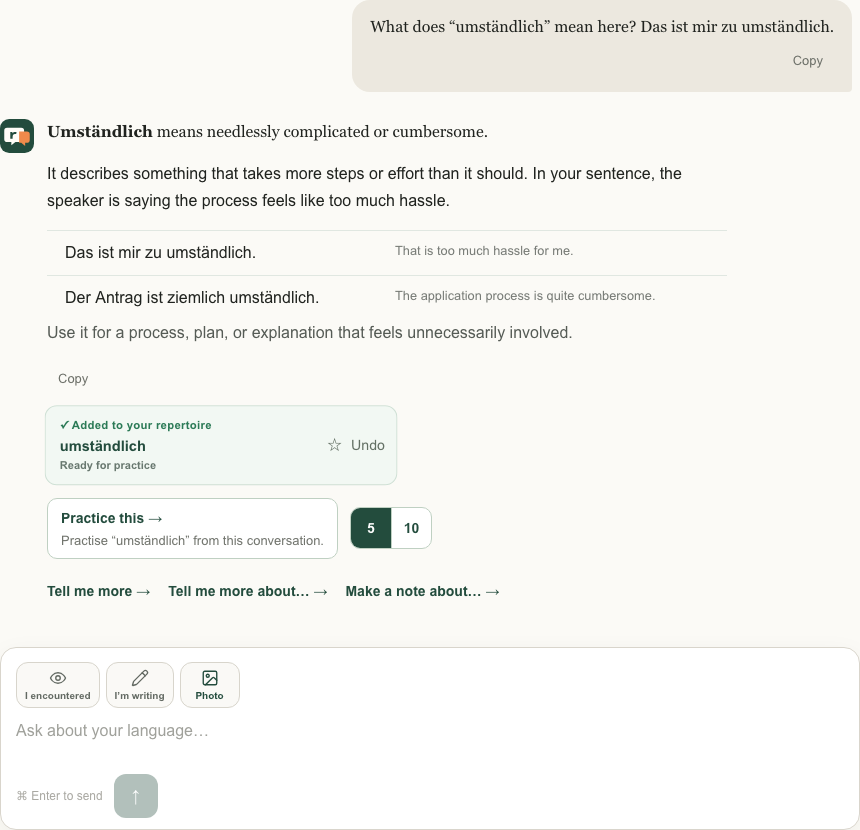
Imagine you’re learning German and a sentence stops you. The unfamiliar word is umständlich: “cumbersome” or “needlessly complicated.”
Ask Repertoire, “What does umständlich mean here?” If you only caught the word, start there and add the sentence later. You can ask for another example or check a nuance in the same conversation.
FROM ANSWER TO MEMORY
2. Keep the answer and the conversation
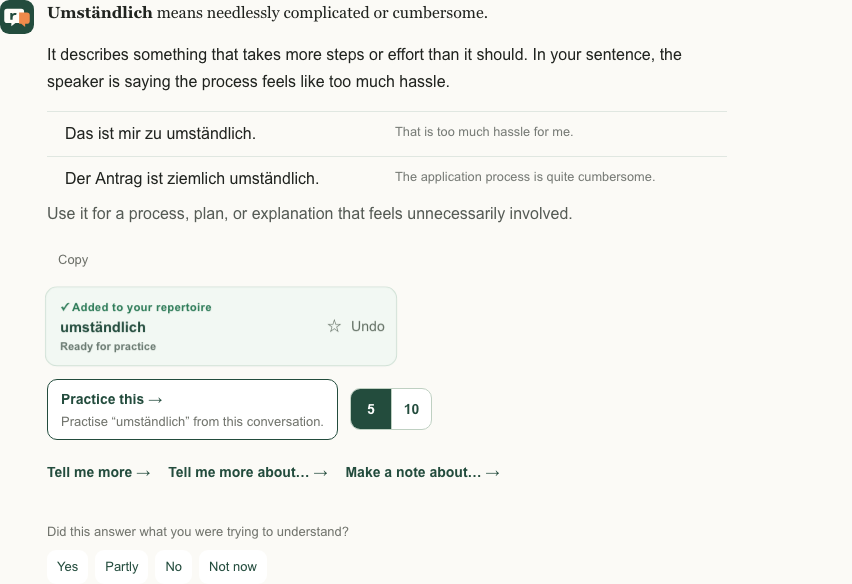
A reusable explanation becomes a Library note with its meaning and translated examples. The answer shows a “Saved to Library” receipt and a way to practise it. You can keep asking about the expression in the same chat.
YOUR LIBRARY
3. Open the note behind the answer
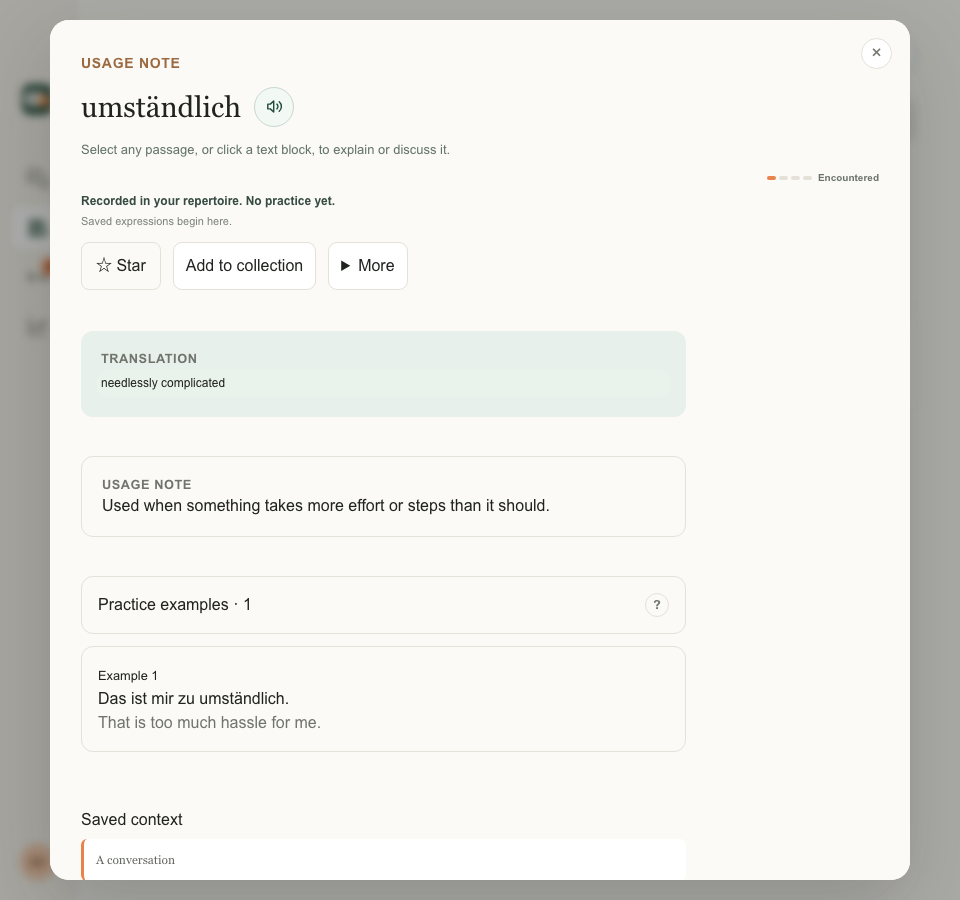
In your Library, the word has a searchable home. Open it to see its translation, usage note, example sentence, and saved context. You can hear it aloud, star it, add it to a collection, or edit it. A word from a film and a correction from a teacher can live in the same Library.
PRACTICE THAT IS READY
4. Practise without making the cards
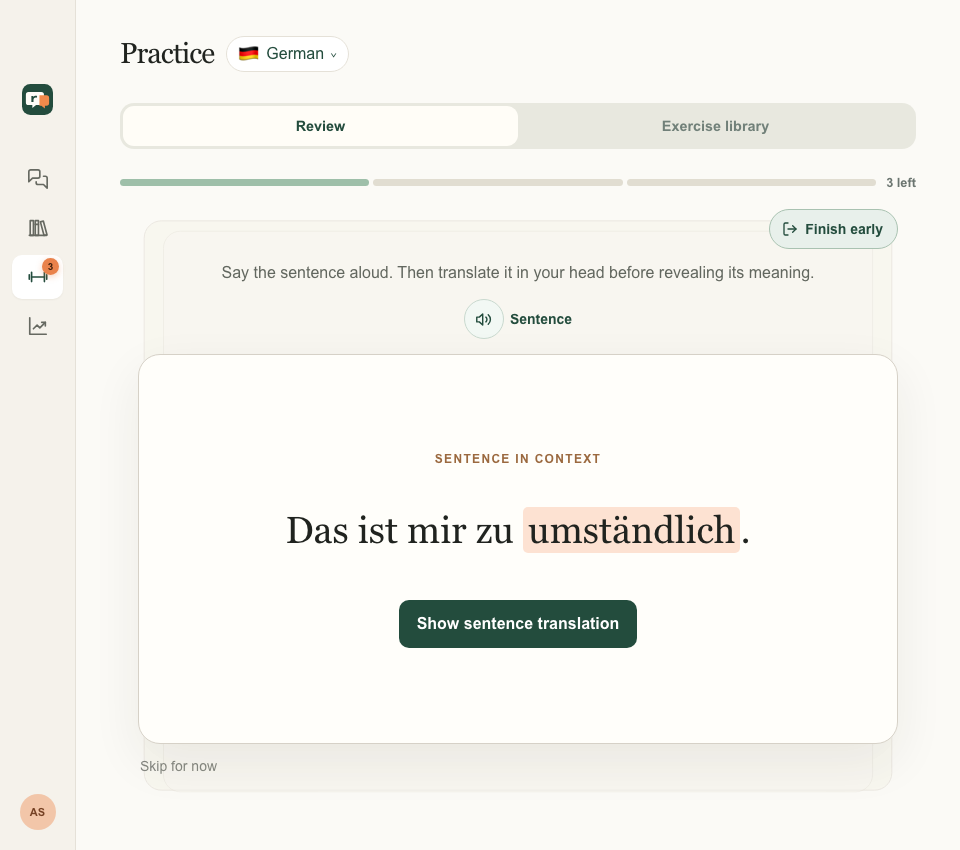
Repertoire turns saved examples into review cards and chooses what is ready. The same German sentence returns in Practice: say it, then try to recall “That’s too much hassle for me” before revealing the translation. After reliable recall, practice can ask you to produce the German sentence from its English translation. Your answers guide when the note comes back. There is no separate flashcard deck to plan or maintain.
THE BIGGER PICTURE
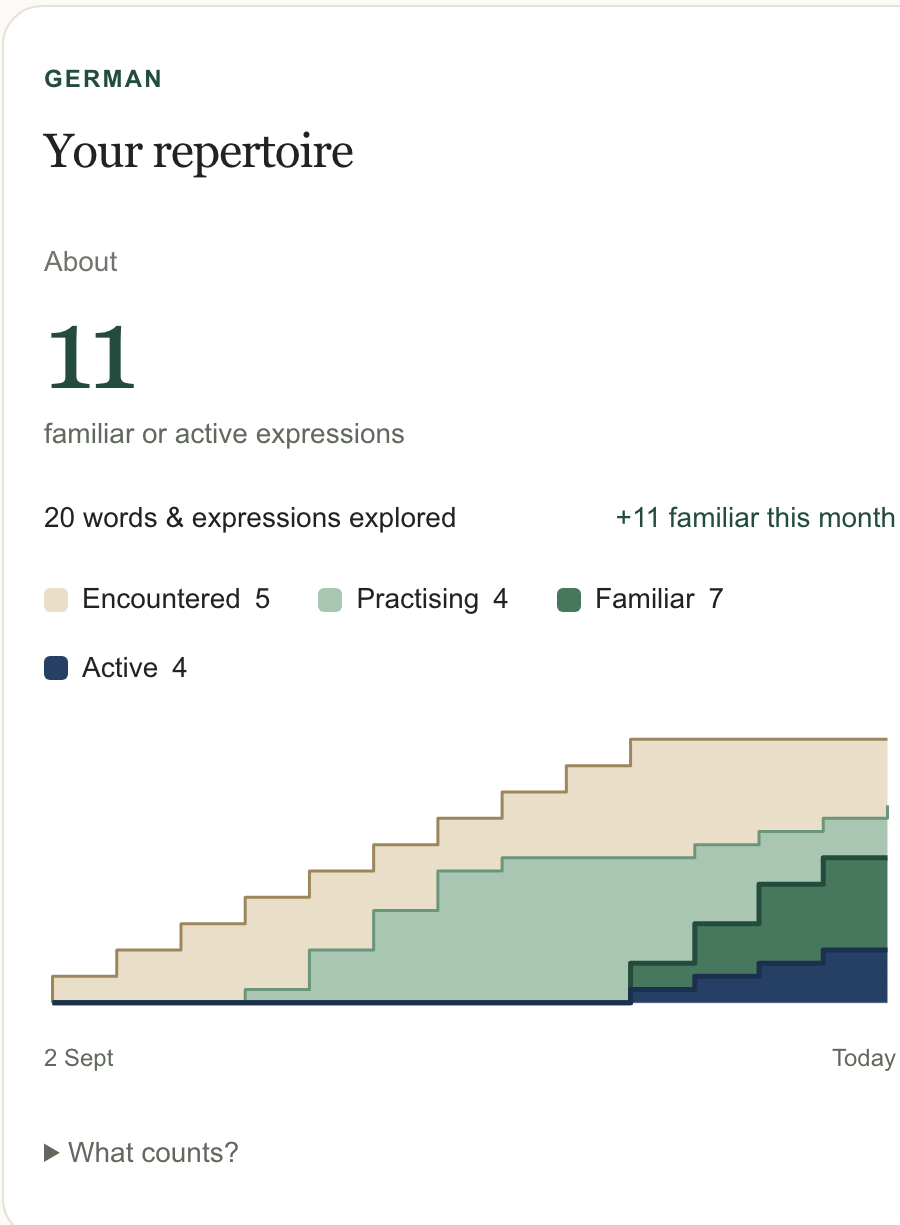
5. See your repertoire grow
Progress distinguishes expressions you have encountered, are practising, know well, and can use actively. It gives the word you asked about a place in the larger picture of your learning.
The review flow draws on retrieval practice and spaced practice: try to remember, then return to the language over time.
Sources and further reading
- Karpicke & Roediger (2008) · The critical importance of retrieval for learning
- Cepeda et al. (2006) · Distributed practice in verbal recall tasks
Written with AI assistance. Examples are illustrative.