Inside Repertoire
Why we’re building Repertoire
From the first question to a phrase you can use.
One unfamiliar phrase can send you through a dictionary, a chat, and a deck of cards. Repertoire puts those steps in one place. Ask its AI about the phrase and keep the explanation and examples in your Library. Repertoire plans when to bring them back for practice and shows your progress. The same loop works for grammar, class notes, and corrections.
Ask AI what it means here
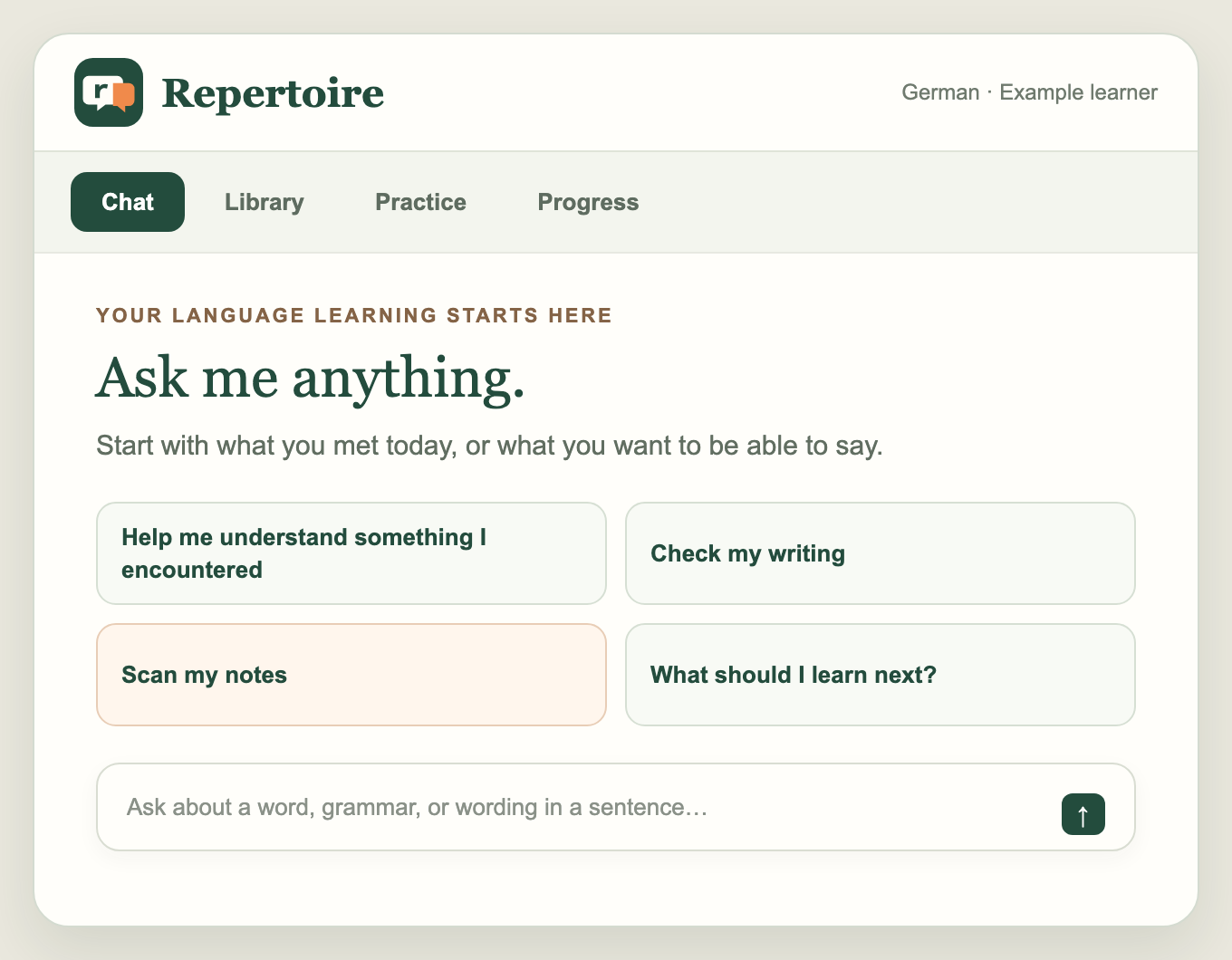
Repertoire greets you with “Ask me anything.” Paste the sentence that stopped you. A dictionary gives you possible meanings; Repertoire explains the one that fits this context and shows it in another example. You can also scan notes, check your writing, or ask what to learn next.
Follow the question
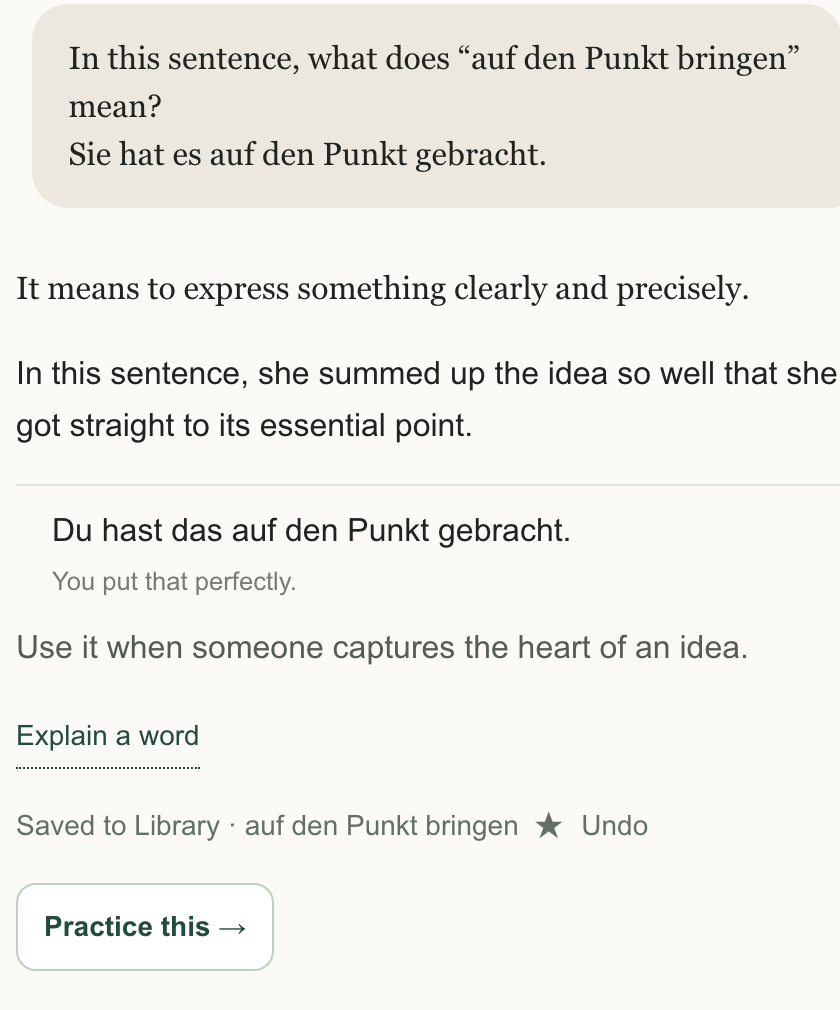
Suppose the phrase is auf den Punkt bringen. Ask what it means. Then ask for another example, its origin, or a related expression. If tomorrow's problem is a flat viewing in German or a homework question, start there instead.
Keep it in your Library
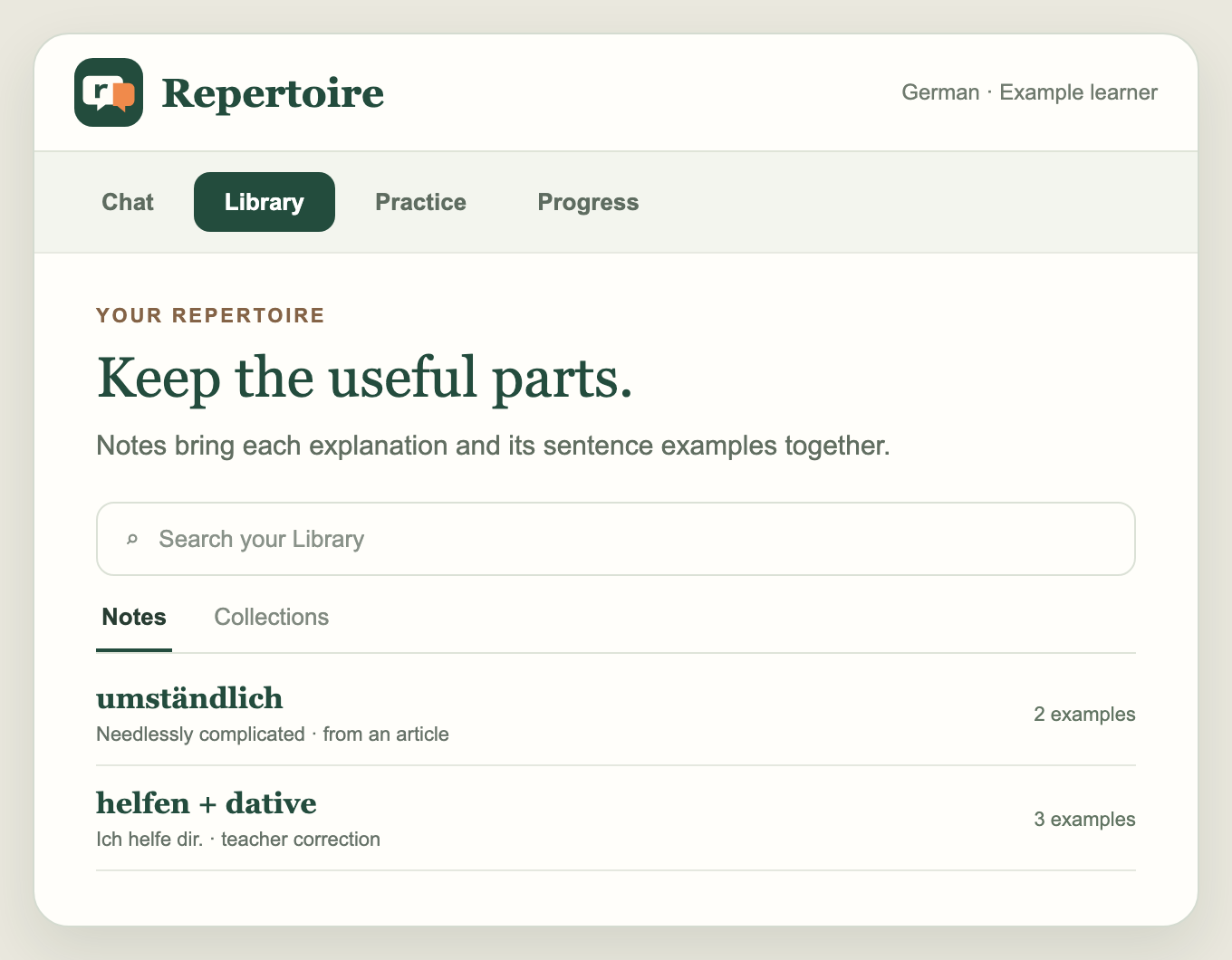
The explanation does not have to vanish with the chat. Keep it as a note, with its example sentences attached. The Library gives your reading, lessons, corrections, and scanned pages a place you can search.
Practise from recall to production
Repertoire builds the practice plan from your notes. It brings back what is due, varies the sentence examples, and returns to harder material sooner. First you recall a meaning. After reliable recall, Repertoire asks you to produce the German sentence from its translation. Your answer helps plan the next review.
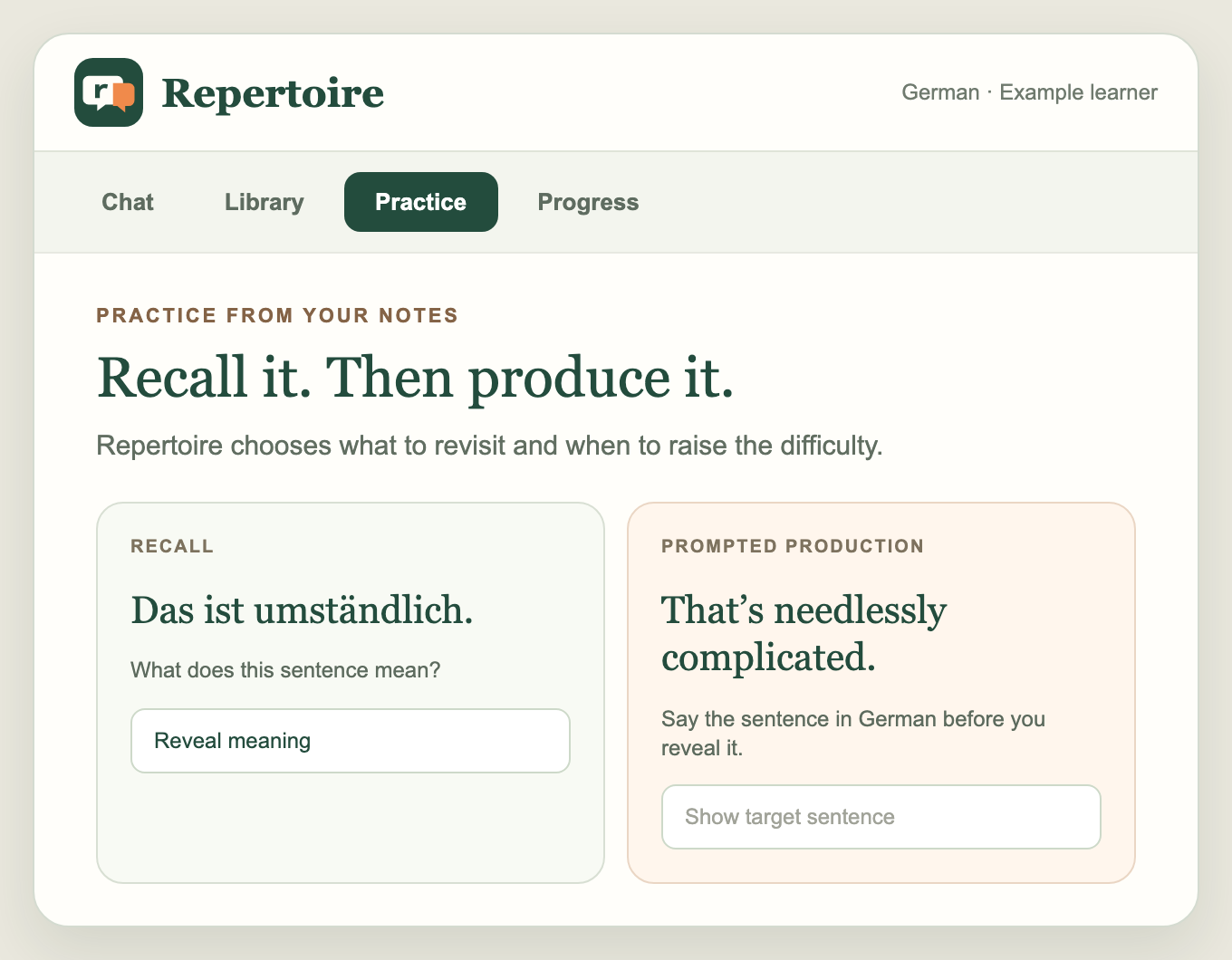
The return trip matters. Research on retrieval and spaced practice supports trying to remember and coming back later. Producing the sentence asks more than recognising it.
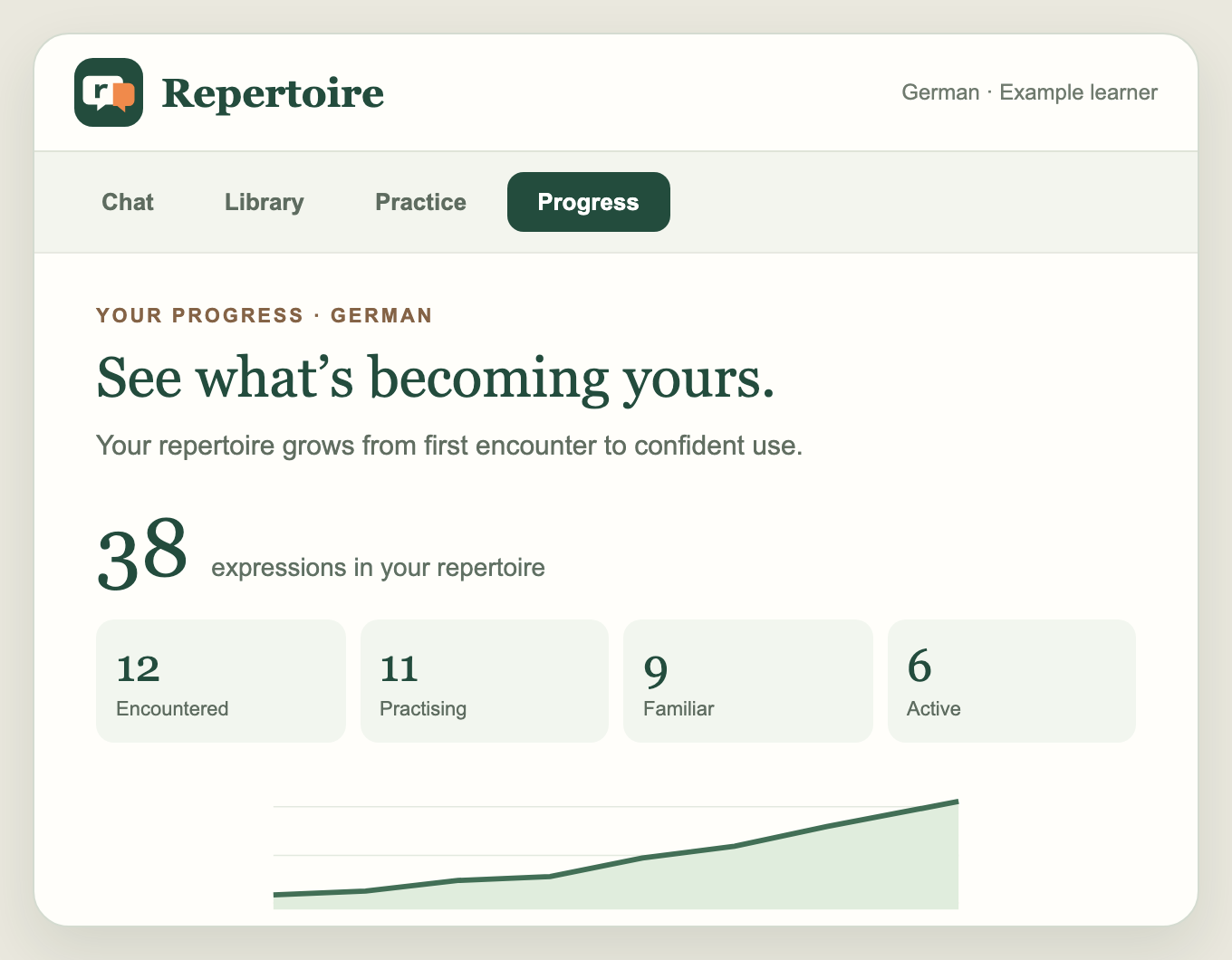
See what is growing
A word you met once should not look the same as one you can use. Progress keeps those stages distinct: Encountered, Practising, Familiar, and Active. It shows where your questions and practice have taken you.
Sources and further reading
- Karpicke & Roediger (2008) · The critical importance of retrieval for learning
- Cepeda et al. (2006) · Distributed practice in verbal recall tasks
Written with AI assistance. Examples are illustrative.